Showing posts with label cinema. Show all posts

Thursday, 21 April 2011

Pather Panchali


Pather Panchali (1955)
by Satyajit Ray

What is it?
Pather Panchali is the story of a family in rural India during the 20s (but it may be yesterday as well). The father, a priest and writer, struggles to support his wife and his two kids Durga and Apu who live in the deteriorated ancestral home. This movie is a story of family and childhood memories. It is a lyrical narration of the life, tragedies and little happiness of an impoverished family
Memorable scene
This film is visually stunning and all the images are composed with great care and technical skill. In my favourite scene Durga and Apu run across a field of tall grass and giant feather looking plants trying to catch a glimpse of the train that they have heard several times but never seen.
Did you know?
The music for Pather Panchali was composed by an emerging sitar player called Ravi Shankar. The same Ravi Shankar that played at Woodstock and became an internationally recognized musician. Even John Coltrane name his son Ravi Coltrane after Shankar.
Why is it worth watching this movie?
Pather Panchali is a movie which manages to bring the simplicity of life into a lyrical level. Enriched by the stunning images and brilliant music, the life and tragedy of this poor family becomes beautiful and eternal. This film has some of the sweetest childhood memories I have seen on the screen: the kids following the candy seller, gathering to watch image shown in the bioscope or following a theater play.
I have to confess that for me it was not an easy film to watch, it flows slowly with serenity and patience requiring lots of attention. But it brought to me the sweet aftertaste of a poem and its sequences linger and keep growing in my memory.

Friday, 15 April 2011

The Postman Always Rings Twice

Adaptations Smackdown


vs.


The Postman Always Rings Twice (1946)
a film by Tay Garnett
vs.
Ossessione (1943)
a film by Luchino Visconti

Introduction
Both of these movies are screen adaptations of the novel The Postman Always Rings Twice (1934) by James M. Cain. This is the story of a drifter who has an affair with the beautiful wife of road restaurant owner much older than her. They conspire to get rid of the husband and attempt to start a new life together without losing the restaurant.
In the blue corner: from 1943, the movie that has been considered the first Italian neorealist film. The first film of Luchino Visconti, the director of The Leopard, Death In Venice and Saló. After escaping the censorship of the fascist government and distribution issues here is: Ossesione.
In the red corner: from 1946, from the powerful Metro-Goldwin-Mayer, featuring Lana Turner and John Garfield. Along movies like the Maltese Falcon and Out of the Past a representative of the America film-noir. After escaping the Hays code censorship here: is The Postman Always Rings Twice.
Round 1. Cross-counter of femme facts
The Postman Always Rings Twice opens with a lipstick rolling on the floor and the camera follows it to find the long and beautiful legs of Lana Turner. Ossessione opens with a nicely composed image and a suggestive pair of legs but the Hollywood take is an instant classic. The femme fatal is the heart a film-noir and Turner is a great one. Round for The Postman...
Round 2. Cinematography jab
Right after the opening scene the The Postman... forgets about the camera movements and Ossessione is rich in travelings and open takes, the camera descends into the action and moves with the characters. The great takes of Ossessione make the road one more character. Round for Ossessione.
Round 3. Punching cinema
But Ossessione is not an easy film to watch. The rhythm of the Italian makes the subtitles hard to follow and the condition of the film and its DVD transfers is really poor. The composition of the story, the clear dialogs and the staged situation make the American adaptation a more accessible film. Round for The Postman...
Round 4. Realism uppercut
However, Ossessione is a richer film. Visconti took the camera to the street. The people and the actions in the background give a new dimension to the story and suddenly the characters acquire personality and seem guided by confuse and capricious human emotions. The great weakness of The Postman... is the interpretation of the husband as a player in this story of desire and ambition. The drifter and the wife do the trick and although the lawyers are pretty good, round for Ossessione.
Round 5. Boxing styles
If Ossessione was a boxer it would be an out-fighter, a boxer that tries to wear and opponent down by strategy, rather than simply knocking him out. The Postman... is a swamer, a boxer that overwhelms by applying constant pressure. Different styles, effective in different aspects, they are both good movies, but the final point goes to Ossessione for pushing the cinematographic and narrative boundaries, for being the suggestive movie that The Postman... longed to be.
And the winner is, by eleKino's decision: Ossessione.

Sunday, 6 March 2011

Army Of Shadows (Bonus Track)


Army Of Shadows (1969)
a film by Jean-Pierre

What is it?
The dark story of a group of members of the French resistance during World War II. Visually impressive and moving film about the meaning of life in clandestinity.
Memorable scene
The first minutes of the film summarize in sound and images the fear and despair that came with the advent of the World War II. The sight of German soldiers goose-stepping past the Arc de Triomphe is more powerful than any explanation.
Favourite quote
"She said five minutes, but she'll wait a lifetime" - Jean-Francoise Jardie
Gossip
This film was attacked by the critics of Cahier du Cinema for seeming pro-de Gaulle just in the middle of the spirit brought by May of 68. The film was later restored and released in North America in 1996 and became a popular as a classic misunderstood on its time.
Why is it worth watching this movie?
Because this is a blunt and dark historical portrait, it is greatly casted and tells with great care of aesthetics the story of this shadows that live anonymously in history.

Saturday, 5 March 2011

Gone With The Wind


Gone With The Wind (1939)
a film by Victor Fleming

What is it?
The chronicles of a family in the South of the United States before, during and after the Civil War embodied in the strong character of a woman decided to do anything to scape from the misery that came with the change of times. A masterpiece of the Hollywood studio system.
Memorable scene
Right at the end of the first part, in a beautiful scene with natural light in the shadow of twilight Scarlett swears that he family won't ever be hungry again.
Favourite quote
"Frankly, my dear, I don't give a damn" - Rhett Butler
Interesting
The wood structures burned to recreate the fire of Atlanta were the walls of Babylon in D.W. Griffith's Intolerance (1916) and the ruins in King Kong (1933).
Why is it worth watching this movie?

To watch the film that has produced so many scenes embedded in popular culture and understand what is it all about. See a portrait of the American history in the tormented and passionate life of Scarlett O'Hara and her family. Because is great to hear Rhett Butler.

Monday, 28 February 2011

Before The Rain


Before The Rain (1994)
a film by Milcho Manchevski

I can't stop being surprised by the contradictory feelings and ideas that this movie produced me. For being a good movie I was surprised to see so many beautiful landscapes contrasted with tacky image treatment, so many memorable moments followed by weak acting, and so many emotional peaks in the middle of superfluous takes. The power of this story, transmitted in a brilliant way by most of the images, by the music and by the emotional load of its content was almost spoiled by stereotypical melodrama.

This movie is composed of three -tragic- stories. In the first one an Albanian girl looks for refuge at a monastery in the middle of vendetta that aims to her as the assassin of a man in a Macedonian village. In the second one a British photographer has to decide between her husband, a boring wealthy man and her lover, a war photographer decided to return to his home town in Macedonia. And the third story is the story of the war photographer returning to his village after a successful career and seventeen out of his homeland.

This movie is valuable as a testimony of the brutal and irrational nature of violence. It was release in the advent of the war in the Balkans and it was quite a surprise coming from a new country with no tradition in cinema. The director certainly uses very powerful resources as the music and the beautiful landscapes to emphasize the already powerful story of violence and division lived in the Balkans.

This film has been praised by its originality and its treatment of interrelated story lines, and it is certainly original, but the quality of the story lines was too inhomogeneous to keep the unity of the narrative. Particularly I found very poor the scenes in London and in a common feature with Beautiful People, the desire of bringing the drama of the conflict and irrational violence in the form of unexpected tragedy in another country -the scene of the restaurant shooting- seems detached from the main story and was hardly complementing the rest of the film. I take the great casting and the untouched landscapes as a souvenir from this movie, I keep the emotions that the irrational violence shown in the screen produces, but I fear what I'm going to remember are the parts of the film that seem as weakly composed as a collage of newspaper cuts only glued with water.

Friday, 25 February 2011

The Earrings of Madame de...


The Earrings of Madame de... (1953)
a film by Max Ophüls

I had great expectations about The Earrings of Madame de... Although I found the cinematography of this film brilliant and its narrative really strong and creative, I had problems empathizing with the characters. The love, the hate, the jealousy and all the emotions in the characters seemed to me covered with a veil of aloofness that made their passions really hard to believe.

But don't get me wrong, this is a really good historical movie. It is filmed with extreme care for detail and creative use of the camera. The story of love and passion that is unleashed when Madame de... sells a pair of earrings that her husband gave her for their marriage is entertaining and beautiful. I really liked the appearance of Vittorio De Sica, one of my favorite directors in the role of an Italian ambassador, and I like the composition of the sequences and the details on the clothing and the space of the character, but I kept waiting for that moment of extreme emotion that this love story was announcing, but that moment -for me- never came.

This movie is a great portrait of the life of aristocrats in Europe before the World War I. A life detached from reality and full of excess, this film reminded me a lot of Madame Bovary. For me two things about this movie are worth seeing it. On the first hand, the montage of the ballroom scenes is excellent, the movement of the camera, the composition of the scene and the narrative importance of the sequence are stylish and effective. On the other hand, the first scene of this movie is technically brilliant, the kind of scene that is worth tribute of other directors and that shows the genious of Ophuls and lingers in my mind, even when I was so cold hearted about the rest of the movie.

Wednesday, 23 February 2011

Kramer vs. Kramer


Kramer vs. Kramer (1979)
a film by Robert Benton

Kramer vs. Kramer is heart-breaking movie. This story of separation and love is really vivid and emotional thanks to the great performances of Meryl Streep and Dustin Hoffman. They separate the film from the melodrama and construct a movie in which feelings and actions develop spontaneously in the screen delivering emotions with great humanity.

This is the story of Joanna, a woman who decides to leave her workaholic husband and their young kid to run away from the frustrations of her marriage. Alone, the father has to raise the kid and cope with the absence of his wife. In this movie the meaning of fatherhood and motherhood are revisited, as well as the roles of men and women in modern families. And as melodramatic as it may sound it is a fresh, moving and entertaining story.

This movie also has a couple of sequences that I consider memorable. The court scenes are unbearably painful, and so emotional that despite the fact they are excellent, I won't count as my favorites. I prefer the long traveling made by a running Dustin Hoffman (he is good running, like in The Graduate) and the really funny scene of Phyllis walk of shame. I love her glasses too.

Monday, 21 February 2011

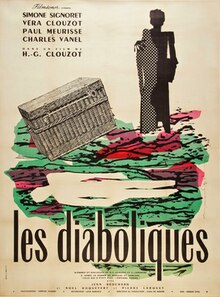
Les Diaboliques


Les Diaboliques (1955)
a film by Henri-Georges Clouzot

Les Diaboliques is a very good suspense film. It has nothing to envy to the vibrant Alfred Hitchcock's movies, this is a thriller with all the twists and the malice. It features two stylish female characters and an electrifying plot.

This is the story of Cristina, a frail wife and Nicole, a seductive mistress decided to end with the dysfunctional relation that bounds them the same man, the tyrannical and mean director of a boarding school owned by Cristina and where Nicole is a teacher. The have constructed a plot to get rid of the man that abuses them both physically and emotionally and as the movie starts we jump into the moving train of their plan. In words of one of the characters: "I may be reactionaty, but this is absolutely astounding -the legal wife consoling the mistress! No, no and no!".

This story sets up in the closed universe of the boarding school and although some of the actions happen outside of it, the tension is enhanced by the characters and relationships established in this small space. It is in this setting that Clouzot constructs images that are all capable of lying and it is this deceiving character what enhances the mystery and lead the thriller.

Les Diaboliques is a thriller per excellence. Clouzot puts in images the psychology of the characters and a take of the glass with a sedative, the water dripping on the plastic using to cover the body, a lighter found were a body should be, all these are windows into the minds of the characters and is their anxiety and despair reflected in this images what tells the story and conducts the thrill. This is the kind of movie that engages, keeps one on the edge of the seat and it is hard to watch in the darkness.

Friday, 11 February 2011

Berlin Alexanderplatz


Berlin Alexanderplatz (1980)
a film by Rainer Werner Fassbinder

I got Berlin Alexanderplatz from the library naively and thinking it would be a 2 hours experience, thinking it would be a movie for one night. Completely ignoring the story and the legend I asked for it in the counter. And the answer from the librarian came to me as bucket of cold water: "Which of the seven DVDs?". This is one of the longest films in the history of cinema, is a movie in 13 episodes and an epilogue, a 940 minutes long film! This chronicle is the story of how I took the DVDs and in less than a week I watched Berlin Alexanderplatz and got to know who was Rainer Werner Fassbinder.

Berlin Alexanderplatz is the adaptation of the 1929 novel by Alexander Döblin, as I found out later, a highly regarded book, ranked among the best books in German language and in any language, a classic of the German expressionism and world literature. This book was an obsession for the "enfant-terrible" of the German New Cinema: Rainer Werner Fassbinder, a man with a vibrant and precipitated life which ended by an overdose when he was 37, leaving behind more than 40 films concluded. Berlin Alexanderplatz is the realization of his childhood dream of bringing the novel into the screen, a task of epic proportions which he consummated brilliantly in this film.

My first critical strike went to the fact that this is considered a full-length film instead of a series, and that they may as well consider for the list any TV series. But understanding the context and watching the film I understood the segmentation was just a product of the TV production. The parts of Berlin Alexanderplatz don't work as episodes and just like with a book the pauses are required but the thread is intact. After the second episode I required more and more of my time to continue with the story without interruption. Fassbinder has filmed virtually all of a novel, faithfully and enriching the text with unforgeable images.

This story is best summarized in the words of Alexander Döblin read by the taciturn voice of Fassbinder in the beginning of the epilogue: "Why do the two angels walk beside Franz, and what child's game is this, that angels should walk beside a man, two angels on Alexanderplatz in Berlin, in 1928, beside a former murdered, a burglar, and now a pimp? Yes, this tale of Franz Biberkopf and his oppressive, yet real and illuminating existence has progressed this far".

For me, the great success of this film is bringing the literature language into the screen with great richness and humanity. The strongest elements of cinema are at the service of the narrative, great music, creative cinematography, incredible photography with a taste for a dramatic contrast of light and darkness -get a good screening to enjoy it fully- and really good actors. The settings and the interpretation are almost theatrical but the actors stand really long shots without cuts in an incredible way, and it is through the fluidity of their performances that the story goes from visceral into poetic, evoking and beautiful.

Making such a long film and sending the audience home with something to think about, with something for their brains to chew is not an easy task. There is not secret behind the 15 and a half hours -fortunately this is not Lost-, there is no big lesson or shortcut to the end. Berlin Alexanderplatz portraits the life of a man: contradictory, sad, brutal and painful but vital and with shinny sparkles of beauty. The life of Franz Biberkopf is full the human condition amidst the personal and social tragedy, and is told in this movie with technical brilliancy and narrative power.

Worth the 15 and a half hours? Absolutely. If cinema was food Berlin Alexanderplatz would be a full meal in a many-Michelin-stars restaurant, but the price to pay for it is not money but time and dedication. I would recommend this movie to anybody who loves cinema, literature, and has the time and patience. This movie has been called The Everest of Modern Cinema and the mountain allegory fits perfectly when one feels free-falling after reaching the top into a phantasmagorical and mind-blowing epilogue. Enjoying this film was quite an experience, a very personal experience, and although I may never climb the Everest, the warm memory of this film confirms for me the word of somebody who did climb that mountain: "it is not the mountain we conquer but ourselves".

Wednesday, 9 February 2011

Women On The Verge Of A Nervous Breakdown


Women On The Verge Of A Nervous Breakdown (1980)
a film by Pedro Almodovar

Visually this film manages to be shocking and vibrant even with the faces of his cast. I wonder how Almodovar casted his actresses, which ultimately carry the load of this tangy comedy full of creative gags, vibrant rhythm and a exaltation of the kitsch aesthetics of the 80s.

Pepa, just dumped by her lover, tries desperately to talk to him while her life becomes the cross roads of terrorist plots, suicide attempts, a police investigation, burning bed, accidental overdose of tranquilizers and a taxi cab that is always there when need. Crazy as it sounds, Almodovar manages to put together all this elements in this funny and extravagant plot.

This movie contains some really memorable moments, some full of sadness and some others zany and insane, but ultimately brilliant. Scenes like those of the Mambo Taxi or Pepa's shock hearing the voice of her lover in a dubbed movie make this movie a must for its freshness and creativity. It features gags never seen before, women portrait as never before, and above all, the work of an early Almodovar, provocative, funny and unleashed.

Sunday, 30 January 2011

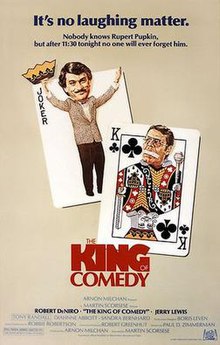
The King Of Comedy


The King Of Comedy (1983)
a film by Martin Scorsese

This is not a comedy nor a thriller, is something strange that lies in between and yet maintains a whimsical tone in a dark story of obsession and entertainment business.

Rupert Pupkin, brilliantly bring to life by Robert DeNiro, is an aspiring stand-up comic with obsessive ambition. After meeting with Jerry Langford, a famous comedian and talk show host, Rupert believes his "big break" has finally come and his obsession unleashes. He will do everything to get his place in the spotlight.

I really liked the ambiguous tone of this film, a portrait of obsession in the world of comic is both paradoxical and interesting. Last time I saw Robert DeNiro was in Taxi Driver and now in The King Of Comedy he surprises me bringing a completely different but equally disturbing portrait of obsession, delirium and social isolation.

This is not a funny movie but still steals some laughs while it delivers a social satire in the shape of a character obsessed with fame. I laughed but mostly felt desolated by the loneliness of this character in his delusion and unlimited ambition. Rupert Pupkin has a charm absent in the Taxi Driver, its alienation is different and less tragic but it is equally shocking.

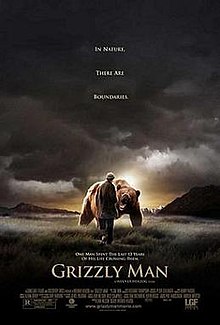
Grizzly Man


Grizzly Man (2005)
a film by Werner Herzog

Grizzly Man is a documentary in which Werner Herzog uses all the power of his narrative and sequence composition to bring the story of Timothy Treadwell, a man that as an end of his delirious obsession of protecting and living with the grizzly bears in Alaska gets himself and his girlfriend eaten.

Timothy Treadwell live among the coastal grizzly bears of the Katmai National Park in Alaska for almost 13 summers before meeting his tragic end. He documented his journeys using a video camera and using this footage Herzog composes the story of his life and his obsession.

Obsession is a topic known for Herzog and is no big surprise that the director of Fitzcarraldo and Aguirre can bring such a great portrait of delirium. What really caught me by surprise was the powerful emotions that it managed to transmit. Treadwell's footage is full of incidental beauties and even in his moments of madness his portrait is so human and his story so tragic that it is deeply touching.

I don't know how he doesn't but Herzog managed to compose this story letting the footage speak, composing more than telling. I felt moved, angry, scared, sad and thoughtful while watching this film, it is a heart-melting mind-blowing piece of cinema.

Saturday, 29 January 2011

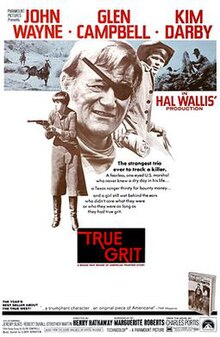
True Grit


True Grit (1969)
a film by Henry Hathaway

With the advent of the Cohen brothers' True Grit I felt compelled to cross this classic off the list and I found myself, a big skeptic of remakes, looking forward for their renewed version but longing that they keep the powerful story and the memorable landscapes as untouched as possible.

After Frank Ross is murdered by his hired hand, Tom Chaney, his 14-year-old daughter, Mattie Ross, leaves her home and hires the ruthless and aging US Marshall Rooster Cogburn to guide her to Indian Territory to capture Chaney and bring him back to the authorities.

This movie seems to arrive out of time. Right in the moment when the American cinema was receiving the effects of the Nouvelle Vague, it takes the camera into the impressive setting of the Western but with an acting an dramaturgy from the age of the studios. It heart-warming to see John Wayne in this movie, but it also seems that his Academy Award came as late as the release of this film. Nevertheless, the story is so powerful and the images are so impressive that this becomes a really enjoyable film. Both the amazing American landscapes and the most intimate and emotional moments between the characters are memorable, but often I found myself asking the director to move the camera a little bit out of the plane, to get a little bit closer to the characters as in that scene in which Mattie receives her dad's watch.

I enjoyed the short times when Robert Duvall and Dennis Hopper appear in the screen, and felt the shake in the scene of the hangings. This is a good movie and I fear I'm asking to much from it now that I know that there is a new release. I'll miss John Wayne, but I hope the Cohen brothers made it well and fix the elements and the limitations of this version because I really like this story.

Sunday, 23 January 2011

The African Queen


The African Queen (1951)
a film by John Houston

The African Queen is a movie in which unexpected elements come together to make a beautiful and entertaining story. I couldn't image that I would like so much this story of implausible love on board of a boat in the heart of Africa in search of survival and heroism. This movie has really impressive takes, that at the time must have been of this kind in the African continent. It has Humprey Bogart at the top of his game and a powerful and lovely Katherine Hepburn, unafraid of showing her age and a glowing with beauty.

Rose Sayer and her brother are missionaries in a village in East Africa, when World War I starts and leaves Rose alone with only the help of the rough boat captain Charlie Allnut. Drifting on board of the African Queen they find love and a purpose: try and sink the German gunboat that grants them control of the navigation on that portion of Africa.

Unlikely but lovely, this is the kind of movie in which is easy to believe the unbelievable. It is easy to follow this story to enjoy the time spent with these too characters and the adventures that await on their journey. This is a great classic, the product of the great actors taken to new levels of adventure by the vision of a great director, but overall, a lovely and heart-warming movie.

Saturday, 22 January 2011

Travolti da un insolito destino nell'azzurro mare d'agosto


Travolti da un insolito destino nell'azzurro mare d'agosto (1974)
a film by Lina Wertmüller

Sometimes is much more easy to write about the films I don't like that about the films I like. The reasons why I don't like this movie that was commercialized in English as Swept Away, are so specific that I find it hard to find something I like about the movie, but I will do my best. But first let me write what is it about.

During a fancy vacation on a fancy sailing boat in the Mediterranean, one of the rich and glamorous tourists -a woman so annoying that boggles the mind-, gets into a fight with one of the members of the crew, with such a bad luck that after a storm, the two of them end up in a deserted island where their social tensions are washed away and the give up into a deep romance.

The main problem I had with this movie is that I didn't believe anything of what was happening in the film. I couldn't believe the main character, annoying as the character required but endlessly boring in her shallowness. I couldn't believe the guy that is stuck with her in the island, too slow to become the skilled castaway. I couldn't believe the storm and I could not believe the passionate relationship that they develop on the island, so overwhelmingly misogynous and brutal that even exceeds the hyperbolic cartoon that these characters are.

Movies are about believing. What we see on the screen is not real but we choose to believe because we like to explore the story, we like to be fooled to enjoy what the film has to deliver. But when the lie is evident, the spell is broken and you see the implausible in the screen. That was my experience in this movie, once I stopped believing, the comedic situation of these cartonish characters became just sound and fury.

Friday, 21 January 2011

Bonnie and Clyde


Bonnie and Clyde (1967)
a film by Arthur Penn

Bonnie and Clyde is the sublimed story of a couple of outlaws. This movie exalts the elements that produce fascination in the stories of criminals and outcasts, brings to new level the romanticism of the story using graphic violence as a counterpoint for an unusual love story and ultimately renews the story that had already fascinated the masses during the "public enemy era".

This movie defined the image of Bonnie and Clyde for the generations that came after it. Bonnie became the glamorous and stylish Faye Dunaway, Clyde became the ruthless but sensible portrait made by Warren Beatty, and with them the story reached new audiences and lingers in time.

I loved what this movie bring in terms of narrative: it brings a breath of fresh air to the American Cinema, with lots of exteriors, camera motions and scenes that challenge the standard conception of cinema. It feel almost as Nouvelle Vague, but was a distinctive American spirit, the landscapes of the never-ending land crossing State borders, and defying the anonymity that condemns the people in the rural United States.

Is the crude-comic tone that this movie uses and the ambiguity in the portrayal of criminals a way of glorifying murderers and banalizing violent actions? That is a huge question that ended up rolling in my mind as I finished watching this movie. Certainly, it will take more than a posting to discuss it and this movie to exemplify it. Maybe what is what it takes to turn a story in the corner of newspaper into a timeless image. In the case of this movie, I don't need to describe the story, it is simply, Bonnie and Clyde.


Wednesday, 19 January 2011

All About Eve


All About Eve (1950)
a film by Joseph Mankiewicz

A fable about ruthless ambition, All About Eve is a great story told through the characters. It is a great satire of the entertainment industry and also a story of the individuals that are part of that industry. The great achievement of this entertaining film is to form a puzzle of characters that fit as the story progresses and we get to know all about Eve.

All about Eve is the story of Margo Channing, an aging Broadway star and Eve Harrington, a helpful young fan who appears in Margo's life, ultimately threatening her career and her personal life in an ambitious search for success.

This movie is a great example of the character development as a mean to tell a story. Very theatrical in its setup, this film acquires its rhythm and engaging atmosphere by showing the relationships of the characters, no wonder why this film go enormous recognition for the work of the actors on it. Bette Davies is sharp and magnificent in her role of the aging star, both strong in her stardom and vulnerable in her personal life. Anne Baxter passes from good to evil in a few photograms and all the cast make a great mosaic in which the story becomes engaging.

All about Eve is a film that is easy to love, is one of the great products of the Hollywood actor system with a fresh and entertaining story with a sense of criticism and satire.

Thursday, 13 January 2011

The Conformist


The Conformist (1970)
a film by Bernardo Bertolucci

The images in The Conformist compose the kind of memories that make me want to watch movies again and again. This is a story that talks through images a beautiful and potent way, frame by frame is not just a series of masterful photographies but a visual work of art. And yet it is not just that, this movie is a poetic and stylish portrait of the social chameleon, a moral tale told with dazzling power of cinema at its best.

The Conformist, is the story Marcello Clerici, a character -brilliantly plater by Jean-Louis Trintignant- drifting with the tide, fitting in the scheme of things, letting himself go in a moment of history were moral decisions and conscience meant facing the storm. In the Italy of the 40s, Clerici volunteers with the Fascist Government to assassinate his former college professor, a dissident leader refuged in France, during his honeymoon in Paris.

With great skill Bertolucci composes a story full with flashback that give away more details about the life of The Conformist and set him a human context right before committing his crime, but the movie does not only depends on these thread, it is so rich in characters and astounding visual elements that still after seeing it several times I have the chance to find new elements while some others still remain as a mystery.

This movie has the great ability to deliver a sense of depth beyond the screen, a structure in which the story develops like a labyrinth, not giving away too much, giving lots of space for thinking. Through the masterful composition of sequences with great visual power, this film gets to deliver a story with aesthetic and narrative beauty and strength. Not to miss are the scenes of Clerici in the Fascist ministry, visiting his father in the sanatorium the blind party and the closing scene.

Some of the things I like most on this and other Bertolucci movies is the role of the female characters. This film brings the counterpoint between a beautiful, strong and independent female character that is the professor's wife and the also beautiful but more detached from reality, naive and vane character that is Clerici's wife. Both seem to be trapped in the tide and as in the sensual and stylish scene where both women dance tango, the beauty and independence seem to survive briefly before being captured and crushed stronger and anonymous forces, the same kind of forces driving Clerici's mechanical actions.

This is a movie to watch again and again. Is the kind of movie that provides enough elements to keep finding surprises, the keep thinking and admiring, and why not, watch two really sexy women dancing tango together.

Thursday, 16 December 2010

2001: A Space Odyssey


2001: A Space Odyssey (1968)
a film by Stanley Kubrick

Many times I had tried to watch this film before an all of them I ended up asleep or confused. I wanted to feel the impact I wanted to experience what people feel as master piece as a memorable art work. So I stepped into the Cinematheque to experience this film with the state-of-the-art projection technology in a 70mm copy and the three hour of devotion it deserves. By the intermission I was shocked, I was amazed. By the end of the film nothing made sense but I loved it.

2001: A Space Odyssey is a audiovisual work of art in three chapters. The first one brings us the "Dawn of Man", where a group of hominids face the complications of life as an early-human, the second brings us a scientist leading the investigation of a disturbing finding on the moon and the third one takes us to the spaceship en-route to Jupiter with the human crew and the memorable HAL. The binding thread for these stories is a mysterious monolith, which presence is equally disturbing for the hominids and the humans living in the space, and which bring the science fiction open-to-discussion background of the movie.
Lots of things have been discussed about this movie but for me it was an enjoyable experience because of the emotion it is able to transmit. Caring little about the discussion on extraterrestrial life or technical achievements I allowed my imagination to flow with the Blue Danube watching the spaceships floating in orbit. I enjoyed the uniforms, the furniture and the aesthetics of this imagined future. I was thrilled by the feeling of awe of the scientist on the moon or the desolation of the Jupiter mission crew. I left myself be terrified by the calmed voice of HAL and got lost in the avalanche of images. This movie delivered feelings and ideas and I value that beyond the story that I may guess or discussed.

This is an open movie, it won't send you home with any answers but with many questions instead. It is the wrinkle in the heart that produces this genius combination of images and sound what I took home. I opened my senses and I was filled with emotions and ideas. I could talk about science fiction but that doesn't move me that much.

Monday, 13 December 2010

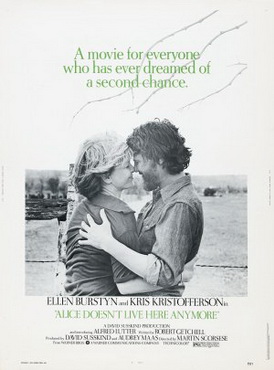
Alice Doesn't Live Here Anymore


Alice Doesn't Live Here Anymore (1974)
a film by Martin Scorsese

I couldn't believe this was an Scorsese movie until the music started playing and the narrative got me engaged. Alice Doesn't Live Here Anymore is an Scorsese movie that doesn't look like the rest of his works but keeps his great narrative power. This movie is funny, sensitive and thoughtful, it is a portrait of woman.

Alice Hyatt, a housewife in a small town in New Mexico looses her husband in an accident and decides to leave the town with her precocious son and travel to her hometown in California to follow the singing career she abandoned when she married. This is a story that happens on the road where mother and son find love, troubles and memorable characters.

The soul of this movie is Ellen Burstyn playing Alice. She is natural, funny, tough, sensitive, absent, smart and contradictory. Her role is really memorable and it blends perfectly with the role of the son who gives her a hard time with his insolent intelligence. On the road both of them discover the scary character played by Harvey Keitel, a smart and sharp androgynous girl played by Jodie Foster and a brutal but sensitive man played by Kris Kristofferson along other memorable characters.

Alice Doesn't Live Here Anymore is a entertaining and moving story. It is a love story full the human contradictions, a mix of great acting and a fresh story, a road movie featuring a woman that seems so real and interesting that you want to follow across the American Southwest after the first scene.