Friday, 25 February 2011

The Earrings of Madame de...


The Earrings of Madame de... (1953)
a film by Max Ophüls

I had great expectations about The Earrings of Madame de... Although I found the cinematography of this film brilliant and its narrative really strong and creative, I had problems empathizing with the characters. The love, the hate, the jealousy and all the emotions in the characters seemed to me covered with a veil of aloofness that made their passions really hard to believe.

But don't get me wrong, this is a really good historical movie. It is filmed with extreme care for detail and creative use of the camera. The story of love and passion that is unleashed when Madame de... sells a pair of earrings that her husband gave her for their marriage is entertaining and beautiful. I really liked the appearance of Vittorio De Sica, one of my favorite directors in the role of an Italian ambassador, and I like the composition of the sequences and the details on the clothing and the space of the character, but I kept waiting for that moment of extreme emotion that this love story was announcing, but that moment -for me- never came.

This movie is a great portrait of the life of aristocrats in Europe before the World War I. A life detached from reality and full of excess, this film reminded me a lot of Madame Bovary. For me two things about this movie are worth seeing it. On the first hand, the montage of the ballroom scenes is excellent, the movement of the camera, the composition of the scene and the narrative importance of the sequence are stylish and effective. On the other hand, the first scene of this movie is technically brilliant, the kind of scene that is worth tribute of other directors and that shows the genious of Ophuls and lingers in my mind, even when I was so cold hearted about the rest of the movie.

Wednesday, 23 February 2011

Kramer vs. Kramer


Kramer vs. Kramer (1979)
a film by Robert Benton

Kramer vs. Kramer is heart-breaking movie. This story of separation and love is really vivid and emotional thanks to the great performances of Meryl Streep and Dustin Hoffman. They separate the film from the melodrama and construct a movie in which feelings and actions develop spontaneously in the screen delivering emotions with great humanity.

This is the story of Joanna, a woman who decides to leave her workaholic husband and their young kid to run away from the frustrations of her marriage. Alone, the father has to raise the kid and cope with the absence of his wife. In this movie the meaning of fatherhood and motherhood are revisited, as well as the roles of men and women in modern families. And as melodramatic as it may sound it is a fresh, moving and entertaining story.

This movie also has a couple of sequences that I consider memorable. The court scenes are unbearably painful, and so emotional that despite the fact they are excellent, I won't count as my favorites. I prefer the long traveling made by a running Dustin Hoffman (he is good running, like in The Graduate) and the really funny scene of Phyllis walk of shame. I love her glasses too.

Monday, 21 February 2011

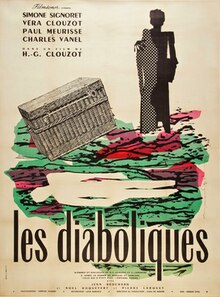
Les Diaboliques


Les Diaboliques (1955)
a film by Henri-Georges Clouzot

Les Diaboliques is a very good suspense film. It has nothing to envy to the vibrant Alfred Hitchcock's movies, this is a thriller with all the twists and the malice. It features two stylish female characters and an electrifying plot.

This is the story of Cristina, a frail wife and Nicole, a seductive mistress decided to end with the dysfunctional relation that bounds them the same man, the tyrannical and mean director of a boarding school owned by Cristina and where Nicole is a teacher. The have constructed a plot to get rid of the man that abuses them both physically and emotionally and as the movie starts we jump into the moving train of their plan. In words of one of the characters: "I may be reactionaty, but this is absolutely astounding -the legal wife consoling the mistress! No, no and no!".

This story sets up in the closed universe of the boarding school and although some of the actions happen outside of it, the tension is enhanced by the characters and relationships established in this small space. It is in this setting that Clouzot constructs images that are all capable of lying and it is this deceiving character what enhances the mystery and lead the thriller.

Les Diaboliques is a thriller per excellence. Clouzot puts in images the psychology of the characters and a take of the glass with a sedative, the water dripping on the plastic using to cover the body, a lighter found were a body should be, all these are windows into the minds of the characters and is their anxiety and despair reflected in this images what tells the story and conducts the thrill. This is the kind of movie that engages, keeps one on the edge of the seat and it is hard to watch in the darkness.

Friday, 11 February 2011

Berlin Alexanderplatz


Berlin Alexanderplatz (1980)
a film by Rainer Werner Fassbinder

I got Berlin Alexanderplatz from the library naively and thinking it would be a 2 hours experience, thinking it would be a movie for one night. Completely ignoring the story and the legend I asked for it in the counter. And the answer from the librarian came to me as bucket of cold water: "Which of the seven DVDs?". This is one of the longest films in the history of cinema, is a movie in 13 episodes and an epilogue, a 940 minutes long film! This chronicle is the story of how I took the DVDs and in less than a week I watched Berlin Alexanderplatz and got to know who was Rainer Werner Fassbinder.

Berlin Alexanderplatz is the adaptation of the 1929 novel by Alexander Döblin, as I found out later, a highly regarded book, ranked among the best books in German language and in any language, a classic of the German expressionism and world literature. This book was an obsession for the "enfant-terrible" of the German New Cinema: Rainer Werner Fassbinder, a man with a vibrant and precipitated life which ended by an overdose when he was 37, leaving behind more than 40 films concluded. Berlin Alexanderplatz is the realization of his childhood dream of bringing the novel into the screen, a task of epic proportions which he consummated brilliantly in this film.

My first critical strike went to the fact that this is considered a full-length film instead of a series, and that they may as well consider for the list any TV series. But understanding the context and watching the film I understood the segmentation was just a product of the TV production. The parts of Berlin Alexanderplatz don't work as episodes and just like with a book the pauses are required but the thread is intact. After the second episode I required more and more of my time to continue with the story without interruption. Fassbinder has filmed virtually all of a novel, faithfully and enriching the text with unforgeable images.

This story is best summarized in the words of Alexander Döblin read by the taciturn voice of Fassbinder in the beginning of the epilogue: "Why do the two angels walk beside Franz, and what child's game is this, that angels should walk beside a man, two angels on Alexanderplatz in Berlin, in 1928, beside a former murdered, a burglar, and now a pimp? Yes, this tale of Franz Biberkopf and his oppressive, yet real and illuminating existence has progressed this far".

For me, the great success of this film is bringing the literature language into the screen with great richness and humanity. The strongest elements of cinema are at the service of the narrative, great music, creative cinematography, incredible photography with a taste for a dramatic contrast of light and darkness -get a good screening to enjoy it fully- and really good actors. The settings and the interpretation are almost theatrical but the actors stand really long shots without cuts in an incredible way, and it is through the fluidity of their performances that the story goes from visceral into poetic, evoking and beautiful.

Making such a long film and sending the audience home with something to think about, with something for their brains to chew is not an easy task. There is not secret behind the 15 and a half hours -fortunately this is not Lost-, there is no big lesson or shortcut to the end. Berlin Alexanderplatz portraits the life of a man: contradictory, sad, brutal and painful but vital and with shinny sparkles of beauty. The life of Franz Biberkopf is full the human condition amidst the personal and social tragedy, and is told in this movie with technical brilliancy and narrative power.

Worth the 15 and a half hours? Absolutely. If cinema was food Berlin Alexanderplatz would be a full meal in a many-Michelin-stars restaurant, but the price to pay for it is not money but time and dedication. I would recommend this movie to anybody who loves cinema, literature, and has the time and patience. This movie has been called The Everest of Modern Cinema and the mountain allegory fits perfectly when one feels free-falling after reaching the top into a phantasmagorical and mind-blowing epilogue. Enjoying this film was quite an experience, a very personal experience, and although I may never climb the Everest, the warm memory of this film confirms for me the word of somebody who did climb that mountain: "it is not the mountain we conquer but ourselves".

Wednesday, 9 February 2011

Women On The Verge Of A Nervous Breakdown


Women On The Verge Of A Nervous Breakdown (1980)
a film by Pedro Almodovar

Visually this film manages to be shocking and vibrant even with the faces of his cast. I wonder how Almodovar casted his actresses, which ultimately carry the load of this tangy comedy full of creative gags, vibrant rhythm and a exaltation of the kitsch aesthetics of the 80s.

Pepa, just dumped by her lover, tries desperately to talk to him while her life becomes the cross roads of terrorist plots, suicide attempts, a police investigation, burning bed, accidental overdose of tranquilizers and a taxi cab that is always there when need. Crazy as it sounds, Almodovar manages to put together all this elements in this funny and extravagant plot.

This movie contains some really memorable moments, some full of sadness and some others zany and insane, but ultimately brilliant. Scenes like those of the Mambo Taxi or Pepa's shock hearing the voice of her lover in a dubbed movie make this movie a must for its freshness and creativity. It features gags never seen before, women portrait as never before, and above all, the work of an early Almodovar, provocative, funny and unleashed.

Sunday, 30 January 2011

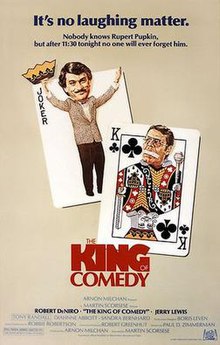
The King Of Comedy


The King Of Comedy (1983)
a film by Martin Scorsese

This is not a comedy nor a thriller, is something strange that lies in between and yet maintains a whimsical tone in a dark story of obsession and entertainment business.

Rupert Pupkin, brilliantly bring to life by Robert DeNiro, is an aspiring stand-up comic with obsessive ambition. After meeting with Jerry Langford, a famous comedian and talk show host, Rupert believes his "big break" has finally come and his obsession unleashes. He will do everything to get his place in the spotlight.

I really liked the ambiguous tone of this film, a portrait of obsession in the world of comic is both paradoxical and interesting. Last time I saw Robert DeNiro was in Taxi Driver and now in The King Of Comedy he surprises me bringing a completely different but equally disturbing portrait of obsession, delirium and social isolation.

This is not a funny movie but still steals some laughs while it delivers a social satire in the shape of a character obsessed with fame. I laughed but mostly felt desolated by the loneliness of this character in his delusion and unlimited ambition. Rupert Pupkin has a charm absent in the Taxi Driver, its alienation is different and less tragic but it is equally shocking.

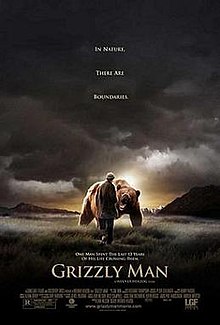
Grizzly Man


Grizzly Man (2005)
a film by Werner Herzog

Grizzly Man is a documentary in which Werner Herzog uses all the power of his narrative and sequence composition to bring the story of Timothy Treadwell, a man that as an end of his delirious obsession of protecting and living with the grizzly bears in Alaska gets himself and his girlfriend eaten.

Timothy Treadwell live among the coastal grizzly bears of the Katmai National Park in Alaska for almost 13 summers before meeting his tragic end. He documented his journeys using a video camera and using this footage Herzog composes the story of his life and his obsession.

Obsession is a topic known for Herzog and is no big surprise that the director of Fitzcarraldo and Aguirre can bring such a great portrait of delirium. What really caught me by surprise was the powerful emotions that it managed to transmit. Treadwell's footage is full of incidental beauties and even in his moments of madness his portrait is so human and his story so tragic that it is deeply touching.

I don't know how he doesn't but Herzog managed to compose this story letting the footage speak, composing more than telling. I felt moved, angry, scared, sad and thoughtful while watching this film, it is a heart-melting mind-blowing piece of cinema.